Let Go
SKU 00402
AU$45 454.55
New Order
Glide
In stock: 1 available
1
Have questions?
Let Go
Product Details

The moment the grip softens and the river takes it.
Descriptivists
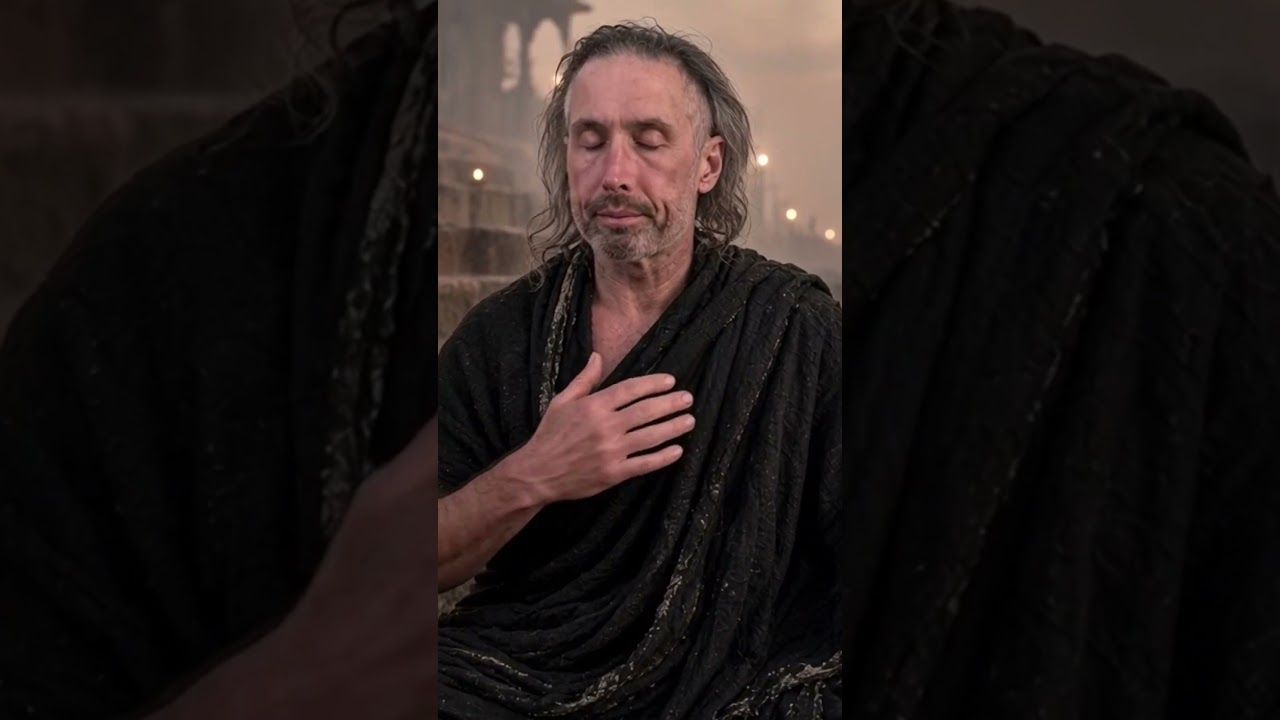
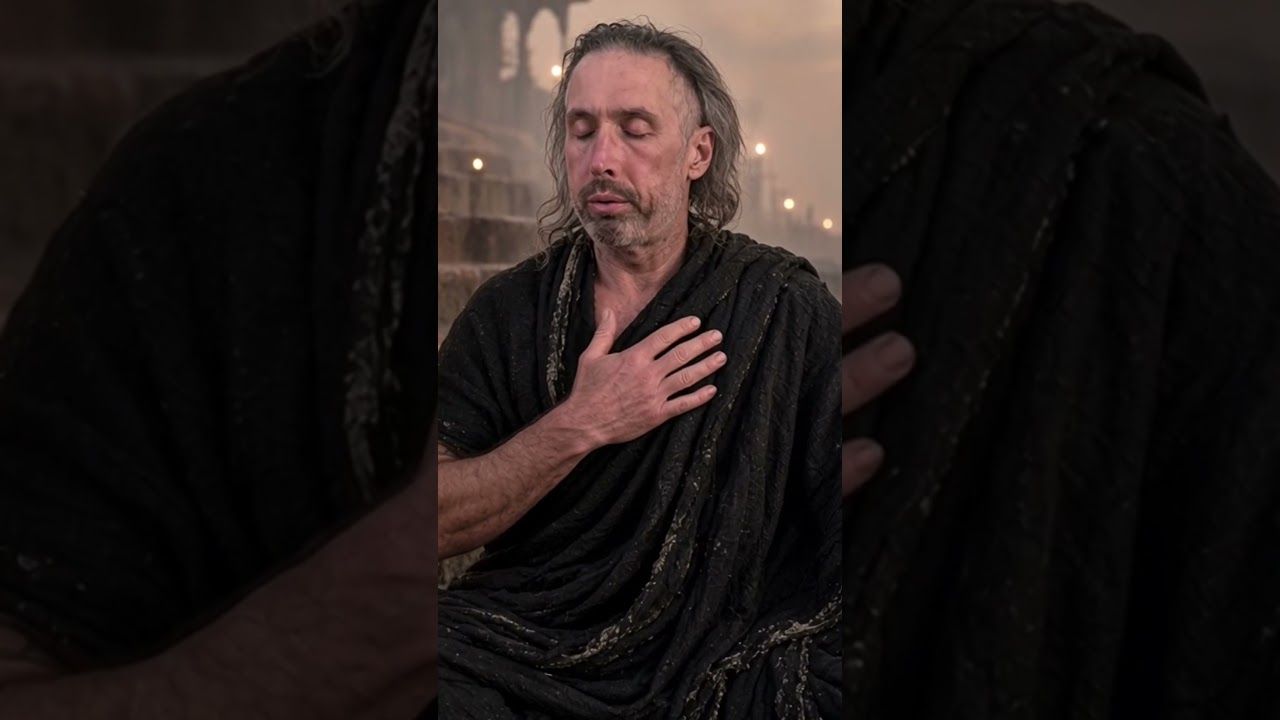
The pose stays. The room drops away. Black cloth wraps you the way a Naga takes the ghat: one dark cotton field over the body, ash-dust at the edges, river stone under the mat.
Volume locked at 55 dB so the 250 BPM stays private — hard pulse, not a festival. The lamps flicker on the kick. The river takes the hats.
The cloth locks. The ghat breathes.
Night current. The river holds the low end.
Animation (lock to 250 BPM, 55 dB):
Frame rate feels like 8–12 fps with micro-holds — sadhu still, world twitching.
Kick: lamps jump one stop brighter.
Snare/hat: a single ripple across the Ganges, cloth edge lifts a millimetre.
Every 16 bars: a pink flash locks in the smoke, then dies.
No big dance. The body does not leave the pose. Only the river, fire, and cloth are allowed to move. Computer-hum floor under the kick, compressed, quiet enough that a ghat dog would not wake.
If you want the next pass I can push rawer ash-and-stone, more cosmic magenta burn, or album-art crop with German-font title burned into the smoke. Say which.
I’ll map the real lineage — Goa to India-born scenes — with dates, places, and the records that actually matter.Indian trance, in the electronic sense, is not a single genre born in a studio in Mumbai. It is a stack: older ritual trance on the subcontinent, then a traveler scene on Goan beaches that invented the template, then records pressed in London and Tel Aviv, then Indian producers taking the sound back.
Two lineages get mixed up. German club trance (Frankfurt, Eye Q, later uplifting trance) and Goa trance grew at the same time and fed each other. Only one of them is Indian in place.
Before the decks
India already had trance as practice: qawwali, Baul, temple percussion, Naga and Aghori ritual, long night kirtan. That is not EDM. It is why Western travelers heard “trance” as a spiritual job for music, not just a nightclub mood. Goa Gil later said the point was to “redefine the ancient tribal ritual for the 21st century.”
1969–1982: the beach before the genreAfter Portugal left Goa (1961), Anjuna, Vagator and Baga became a winter stop on the hippie trail. Hash was easy; living was cheap; Anjuna had no police station. Early parties were live: Grateful Dead, Pink Floyd, The Doors, generator, sand stage. Eight Finger Eddie’s house was a beacon. Alan Zion hauled in a Fender PA overland. Gil Levey arrived from San Francisco in 1970, age 18. This is still rock, not trance.
1983: the cut that made the soundFrench DJs Laurent and Fred Disko, then Goa Gil, dropped rock for European electronics: Kraftwerk, Front 242, Nitzer Ebb, industrial, EBM, early acid, ZYX techno. Heat killed vinyl, so they ran cassette then DAT. They sliced vocals out, stretched instrumental passages, and built eight-hour night-to-dawn arcs. That edit habit is the Goa sound: long form, no verse/chorus, hypnotic rather than hooky. Some scene historians call Laurent the real father of the mix method; Gil became the public face and the ritual DJ.
1990–97: from beach to record shopBy 1990–91 Goa was no longer secret. Travelers went home and wrote tracks for those parties. London labels locked the name:
• Dragonfly (Youth, 1993) — Project II Trance
• TIP Records (Raja Ram, Graham Wood, Ian St Paul, 1994)
• Blue Room Released (1994)
Paul Oakenfold’s 1994 Essential Mix (“the Goa Mix”) put the word in the UK press. Golden-age window is roughly 1994–97: 140-ish BPM, acid lines, Phrygian/“oriental” riffs, mantra samples, cosmic spoken-word. Parties spread to London (Megatripolis, Panjaea), Germany (VooV), France, Japan, Israel, Australia.
The honest split
The place was India. The records of the first wave were mostly made by Europeans, Israelis, Brits, Australians. Israeli backpackers after army service took the sound home and built the next factory: Astral Projection, Infected Mushroom, later full-on and darkpsy. Late 90s the arpeggios thinned, rolling bass took over, tempo climbed, and the shop tag flipped from Goa trance to psytrance.
When Indians start pressing it
The irony sat for a decade: the mythology was Indian, the catalogue was not. Third Eye Records (Karan Bhoj / Third Eye Jedi, early 2000s) was built specifically to put Indian DJs and producers on the same bills as GMS, Astrix, Skazi. Later Indian names in the psy continuum include White Wizard, Farebi Jalebi, Flipknot, Silent Horror, Braindrop, plus labels like Digital Om. Parallel Indian electronic history (Asian Underground in the UK, Mumbai bass/breakbeat nights) is a different river — related only where people crossed over.
What the music actually does
Classic Goa: 8–12 minute tracks, layered 303s, drone bass, mantra or sci-fi samples, designed for open air and sunrise. Psytrance after ~1998: tighter groove, more sound-design, forest/dark/full-on splits. Your 250 BPM number sits on the darkpsy / hitech end of that family, not 1995 Goa (which lived closer to 140–148). 55 dB is the private-temple volume: same ritual, no festival rig.
Display prices in:AUD