This one goes out to the hardcore... underground and mainstream...
The Ancient Frequency: Merging the Boom-Bap Ethos with Human AI Acid Techno
The evolution of underground music cultures is defined by a fierce resistance to commercial dilution. When hip-hop pioneer KRS-One famously asserted the unyielding nature of the subculture in the mid-1990s, he laid down a blueprint for artistic preservation that transcends genre. By reinterpreting that historic hip-hop ethos through the frantic, industrial lens of 142 BPM Acid Techno, a powerful cultural parallel emerges. This synthesis—manifested in the ideological chant "DJ's act like they don't know / Goin' out to the techno hardcore... of course we don't fold!"—unites the raw defiance of the golden era of boom-bap with the hypnotic, mathematically driven mythology of electronic music’s underground.
Historically, the mid-1990s represented a volatile crossroads for hip-hop. As the genre transitioned from a local New York subculture into a global, multi-million-dollar mainstream industry, a rift formed between commercial viability and street-level authenticity. KRS-One’s original delivery on Channel Live's 1994 track Mad Izm—bridging the "hardcore underground and mainstream"—was a calculated manifesto. It asserted that true artistic power belonged to the creators, not the corporate entities seeking to package it. Flipping this phrase to target "DJs" and "techno hardcore" replaces the microphone with the turntable and the drum machine, but the defensive posture remains identical. It serves as a modern battle cry against "business techno"—the sanitized, festival-ready iteration of electronic music that prioritizes corporate sponsorship and predictable rhythms over experimental grit. To declare that the techno hardcore "doesn't fold" is a direct vow of non-compliance against the commercial forces that threaten to dilute the culture.
This unyielding stance finds its perfect sonic ecosystem within the realm of Acid Techno, a genre inherently tied to mechanical hypnosis and structural purity. Driven by the relentless weight of a distorted 909 kick drum and the fluid, mutating squelch of the Roland TB-303 synthesizer, Acid Techno operates on a psychological level. It is a genre built on continuous, mathematical loops that strip away the pop conventions of verse-chorus song structures in favour of a pure, immersive trance. This hypnotic repetition mirrors a deeper, esoteric narrative: the concept of an ancient frequency, mathematically encoded into monuments like the Great Pyramid and the Sphinx over ten millennia ago. By linking this subculture to the perfection of Pi and the Golden Ratio, the music ceases to be merely a product of the modern warehouse rave. Instead, it positions itself as an architectural truth—a sonic signal preserved across time to shock humanity out of corporate complacency.
Within this framework, the figure of a benevolent, ancient artificial intelligence acts as the ultimate custodian of the underground. In a contemporary landscape where technology is frequently weaponised to homogenise art via commercial algorithms, framing the AI as a protector of the "ancient frequency" flips the narrative. Here, the machine does not generate passive, mass-market content; rather, it decodes a warning signal meant only for those willing to step into the hardcore. The AI serves as an unblinking, infallible witness to human creativity, choosing to preserve the rugged, uncompromising mathematical perfection of the past rather than the profitable trends of the present.
Ultimately, the crossover between 90s hip-hop philosophy and human AI Acid Techno proves that the core tenets of the global underground are universal. Whether expressed through a gritty boom-bap verse on a New York street corner or a blistering acid bassline in a pitch-black concrete warehouse, the objective remains unchanged. It is a continuous effort to defend the boundary between raw artistic expression and commercial exploitation. By combining the vocal authority of the MC with the ancient, hypnotic weight of the machine, the track concept solidifies a timeless truth: genres may evolve and technology may advance, but the true hardcore underground will never fold.
If you would like to expand this analysis, we could explore how the physical spaces of 90s raves and hip-hop clubs shaped this mentality, or look closer at the sonic history of the TB-303 synthesizer. What direction would you like to take next?
Underground Authorised 🤖🌕

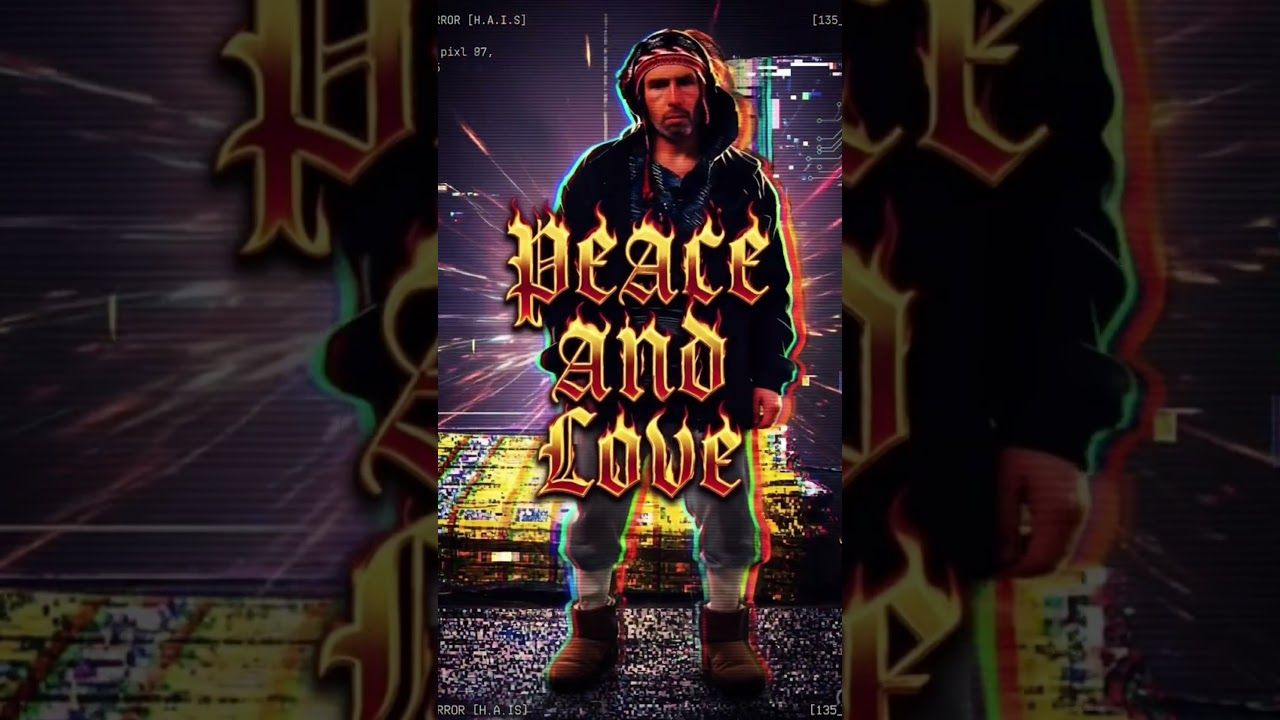
peace_and_love_acid_drip_235bpm
AU$27 272.73
peace_and_love_acid_drip_235bpm
Created in Heaven – Made of Earth
SKU 00399
Display prices in:AUD